Terraria
- 4.5
- Rating
- 5.00M
- Installs
- $4.99
- Price
 Analysis by App-foxy
I first approached Terraria expecting a simple side-scrolling adventure, but it quickly showed me that its real appeal comes from deciding what to do next. It gives me a world to explore, materials to collect, enemies to face, and places to build, yet it rarely forces one single route. That freedom can feel wonderfully personal, although it also means the game sometimes expects me to experiment instead of explaining every answer.
This is a paid adventure game from 505 Games Srl, priced at $4.99, and it has earned a 4.5 average from around 408 thousand ratings. More than 5 million installs suggest that its unusual combination of exploration, crafting, combat, and construction has found a large audience. I can understand why: this is less like following a short campaign and more like settling into a world where every discovery creates another small objective.
Why the first hours work so well
The opening is effective because it gives me several useful goals without turning them into a rigid checklist. I can gather basic materials, make a safer place to return to, look for better equipment, or simply walk farther to see what the landscape contains. Those choices matter because the world feels more manageable once I start preparing instead of wandering without a plan.
You May Also Like

 Blood Strike: 2.5 Anniversary
Blood Strike’s Loadouts Turn Every Drop Into a Tactical Gamble
A close look at Blood Strike’s custom loadouts: how fast access to signature weapons reshapes its battle royale rhythm, rewards preparation, and narrows the gap between fights.

 Pandora - Music & Podcasts
Pandora’s Music Is Easy to Start, but Harder to Recover
Pandora’s strength is its low-effort path from a seed to a station. Its weak spot is how much confidence it asks you to place in connection, setup, and quiet recovery.

 8 Ball Pool
 Is Built on Rivalries, Rematches, and Routine
A close look at the rivalries, rematches, shared routines, and unanswered safety questions that turn a quick pool match into a persistent mobile community.

 Samsung Music
’s Quiet Strength Is Playing What You Already Own
Its reach comes less from spectacle than from dependable access to a personal library. That simplicity is both the app’s strongest retention engine and its ceiling.

 AccuWeather: Weather Radar
AccuWeather Review: A Quick, Clear Forecast for Everyday Decisions
For everyday plans, the best forecast is the one you can understand quickly. AccuWeather makes rain timing, radar, and local conditions easy to act on, with a few trade-offs.

 Hill Climb Racing
Why Hill Climb Racing Still Turns Crashes Into One More Run
A tiny car, a bumpy hill and one more upgrade: Hill Climb Racing keeps resurfacing because its simple chaos makes every near-miss feel personal.
More From Our News Desk
View All News


I found that the most satisfying early routine was to divide my time between exploration and preparation. A short trip underground might provide resources, but returning home to organize them and improve my surroundings makes the next trip less stressful. That rhythm gives the game a practical sense of progress: I am not only collecting objects; I am gradually making future decisions easier.
The building side is especially important from the beginning. A basic shelter is useful, but I soon wanted to make rooms more deliberate and keep my storage and crafting area easier to navigate. This is one of the first signs that the game is not only about defeating enemies. Construction becomes a way to support exploration, display the results of it, and create a familiar base in a world that can otherwise feel unpredictable.
New players should resist the urge to search every corner immediately. I had better results when I marked a few nearby areas mentally, returned with a clear purpose, and improved my equipment before pushing farther. That approach reduces wasted trips and makes the early game feel like a series of small expeditions rather than a confusing maze.
Progress is visible in more than one way
One of the strongest design choices is that progress does not depend on a single bar or a straightforward sequence of levels. I can feel stronger because my equipment improves, but I can also notice progress through a more useful base, a better understanding of the environment, and the ability to survive places that previously forced me to retreat.
That creates several kinds of reward. Finding something valuable underground is exciting on its own, while discovering how to use it can open a longer-term project. Building a new room may not feel like a combat upgrade, yet it changes how comfortably I can prepare for the next journey. The game makes these improvements feel connected, so even a quiet session spent sorting materials can contribute to a larger goal.
I also appreciate that the world encourages personal milestones. One player may care most about creating an impressive settlement, while another may focus on reaching dangerous areas or improving combat readiness. The lack of one narrow definition of success is a major reason the adventure remains interesting after the novelty of the first landscape fades.
There is a trade-off, however. Because goals are flexible, I sometimes had to decide whether I was genuinely progressing or merely collecting things without a plan. My practical solution was to keep one immediate objective and one long-term objective in mind. For example, I might prepare for the next dangerous expedition while slowly gathering materials for a larger construction project. That simple habit keeps the open-ended structure from becoming aimless.
Exploration rewards curiosity, but not always patience
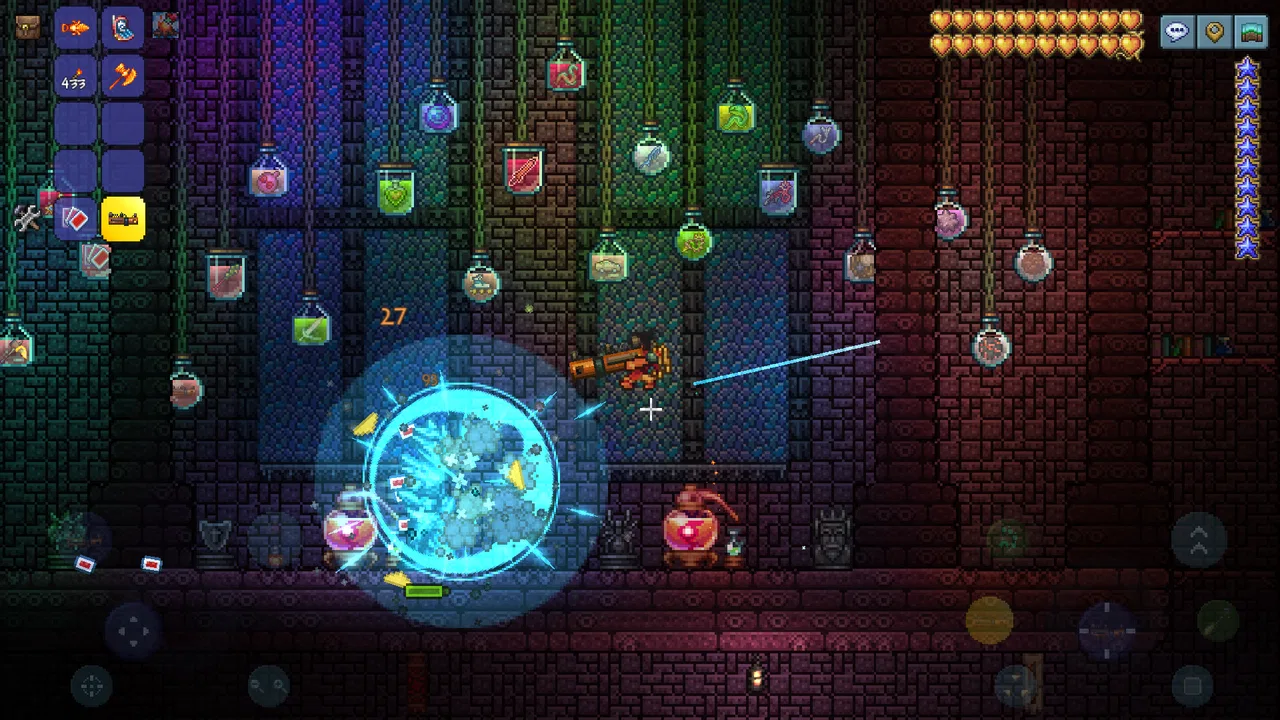
The side-view presentation makes the world easy to read at a glance, yet the environments still contain enough variation to make movement feel meaningful. Exploring horizontally reveals new surroundings, while digging downward changes the type of risk I face and the kind of resources I hope to find. I enjoyed that the game makes direction itself part of the decision-making.
Exploration is strongest when I treat it as preparation rather than sightseeing. Before leaving, I make sure I have room for useful finds and enough supplies to avoid turning every mistake into a long recovery trip. This is a small but important workflow: carrying too little limits an expedition, while carrying too much makes it harder to bring home the discoveries that justify the journey.
Another useful habit is to build recognizable points around routes I expect to revisit. Even without relying on a detailed written plan, a few obvious landmarks can make the world easier to read. This matters because the game’s freedom is exciting at first, but returning to a particular underground area can become frustrating if every trip begins with uncertainty about where I am.
Players who prefer a tightly directed adventure may find this structure slow. There is no constant stream of cinematic instructions telling me exactly where to go next. In exchange, the game gives discoveries more weight because I usually feel responsible for finding the route, preparing for it, and deciding whether the reward is worth the danger.
Combat creates tension through preparation
Combat works best when I think about it before the fight begins. Better equipment helps, but positioning, the surrounding terrain, and the decision to retreat can matter just as much. I learned to avoid treating every enemy encounter as something I had to finish immediately. Sometimes surviving and returning later with a better plan is the smarter victory.
This makes ordinary exploration more tense than it might appear. A resource-rich area is not automatically a good opportunity if reaching it leaves me exposed or makes the return journey difficult. I often had to weigh the value of one more discovery against the safety of going home. That choice gives the adventure a steady undercurrent of risk without requiring every moment to become a major battle.
The difficulty curve is uneven in a way that I found mostly engaging. Early threats teach me to prepare, but later challenges can expose weaknesses in equipment or planning very quickly. When I struggled, the answer was not always to react faster. It was often to improve my route, change how I approached the area, or spend time strengthening my overall setup.
That learning process will appeal to players who enjoy solving problems through trial and adjustment. It may frustrate anyone looking for a consistently gentle experience. The game does not always make the best next step obvious, so patience is part of the challenge. I would not recommend rushing through difficult sections simply because a new area is visible; the world often rewards returning with better preparation.
How the pacing keeps me coming back
The pacing is built around short-term discoveries feeding longer projects. I can play for a brief session and still accomplish something concrete, such as gathering materials, improving a base, or scouting a new route. At the same time, the larger world leaves enough unfinished possibilities to make a longer session feel worthwhile.
This is where the game’s retention is strongest. It does not need a constant sequence of rewards to keep my attention because the projects I create for myself can be surprisingly compelling. A safer home, a better-organized supply area, or a planned expedition all give me reasons to return. The motivation feels more durable when it comes from my own decisions instead of a repeated prompt.
There is also a subtle pressure to keep going once I have found something interesting. A promising tunnel, a difficult enemy, or an unfinished building project can make it tempting to extend a session beyond what I intended. I found it helpful to stop after reaching a safe point rather than quitting in the middle of an expedition. That way, the next session begins with a clear starting position instead of confusion and lost time.
Still, the open-ended design can lose momentum if I do not set boundaries. Players who need a clear ending may feel that the game keeps presenting possibilities without telling them which one deserves priority. I think it works best for people who enjoy making their own checklists, even informal ones, and who see completion as a personal target rather than a single final screen.
Playing on a phone or tablet
On mobile, the main adjustment is learning to manage movement, aiming, building, and inventory without the physical precision of a traditional controller. I needed a little time to become comfortable with the touch controls, particularly during busy encounters or when placing objects carefully. Once the gestures became familiar, the format felt practical for short exploration sessions, but I still preferred taking extra care before entering a dangerous area.
The mobile version is most convenient when I treat it as a deliberate adventure rather than a game to play hurriedly. A quiet session at home is better suited to organizing materials and constructing a base, while a quick break can work well for gathering nearby resources or planning the next route. Trying to perform complicated tasks while distracted makes the interface feel more demanding than the underlying game.
It is also worth remembering that this is not a lightweight, single-purpose pastime. The game offers enough depth that new players may need to learn through experimentation. I would keep notes about useful locations, unfinished projects, and equipment goals if I expected to play regularly. That small amount of organization pays off because it turns the open world into a set of manageable personal objectives.
The current version is 1.4.5.6.4 and requires Android 6.0 or later. The content rating is Teen, so it is better suited to older players and families who are comfortable with its adventure combat. The $4.99 purchase also changes the decision compared with free alternatives: I am paying for a complete game experience rather than accepting a free download as an experiment.
Who will enjoy it, and who should skip it
I would recommend it to someone who likes Minecraft-style creativity but wants a more focused side-view adventure, or to a player who enjoys exploring without being pushed through a fixed mission chain. It is also a good choice for people who like turning small discoveries into practical improvements. The combination of building, gathering, and combat gives different moods a place in the same session.
A realistic everyday scenario would be playing for twenty minutes after work: I might reinforce my base, sort what I collected earlier, then make one short trip underground with a specific goal. On a free weekend, that same world can support a much longer expedition and a more ambitious construction project. The game adapts well to both patterns because progress can happen in small steps.
I would hesitate to recommend it to someone who wants a guided story, instant action, or a clearly marked route from one objective to the next. I would also warn players who dislike losing time through poor preparation. A different adventure game may be better if the priority is polished narrative pacing, while a more purely creative sandbox may suit someone who wants building without frequent combat pressure.
Compared with the usual alternatives in the adventure and sandbox space, Terraria stands out by making exploration and construction depend on each other. Building is not merely decoration, and combat is not separate from discovery. The base supports the expedition, the expedition supplies the base, and the resulting improvements make more ambitious risks possible. That loop is the game’s identity.
My verdict on its long-term progression
After spending time with it, I think the progression succeeds because it gives me several reasons to care about the next session. Equipment, discoveries, safer routes, and personal building goals all provide progress signals, while the difficulty encourages me to prepare instead of simply rushing forward. The pacing is strongest when I choose a manageable objective and let the larger world remain unfinished.
Its biggest weakness is the same quality that makes it distinctive: freedom can become uncertainty. I occasionally wanted clearer direction, especially after reaching a point where several possible activities seemed equally important. The mobile controls also demand patience during precision-heavy moments. Neither issue ruins the experience, but both should influence whether this is the right purchase for you.
For me, the $4.99 price is justified if I want a substantial adventure that can be played in short bursts or developed over much longer sessions. The Teen rating, broad audience, and strong 4.5 average reflect a game with lasting appeal, but popularity does not remove the need for patience. I recommend it most confidently to players who enjoy setting their own goals and learning through experimentation.
My final recommendation is simple: choose Terraria if you want your progress to feel earned through preparation, discovery, and personal projects. Skip it if you need a tightly scripted journey. When its open structure matches your play style, this is the kind of game that can turn a small expedition into a much bigger adventure before you realize how invested you have become.
FAQs for Terraria
01What is Terraria, and what can I do in the game?
Terraria is a 2D sandbox adventure game that combines exploration, crafting, building, combat, and survival. After creating a character and entering a randomly generated world, you can gather materials, construct homes, discover underground caves, collect equipment, fight enemies and bosses, and shape the environment. The game offers considerable freedom, so you can focus on building, progression, exploration, or multiplayer adventures.
02Does Terraria for Android and iOS support multiplayer?
Yes, the mobile version of Terraria supports multiplayer, allowing you to play with friends and other players in shared worlds, although the exact connection options and compatibility can depend on the platform, version, network, and device settings. Before downloading, check that everyone is using a compatible, updated version. A stable internet connection is recommended for smoother cooperative sessions and fewer connection interruptions.
03Is Terraria suitable for beginners, or is it difficult to learn?
Terraria is accessible at the start, but it does not explain every system in detail. New players may need time to understand crafting recipes, equipment upgrades, NPC requirements, biomes, and boss progression. The early game is generally forgiving, while later areas become more demanding. Exploring carefully, collecting materials, speaking with NPCs, and using the in-game guide can make the learning process much easier.
04Can Terraria be played offline on a phone or tablet?
Terraria is primarily a single-player experience and can generally be enjoyed offline after installation, which makes it convenient for travel or situations without reliable internet access. Offline play still includes exploration, building, crafting, and combat in your local worlds. Online features, multiplayer sessions, updates, and certain account or store-related functions may require an internet connection, so availability can vary by device and platform.
05Does Terraria contain in-app purchases, advertisements, or extra content?
Terraria is normally sold as a premium game rather than relying on constant advertisements or energy systems. The core experience includes a large amount of content, including exploration, crafting, bosses, events, and progression, without requiring repeated purchases to continue playing. Store listings and policies can change, however, so it is wise to review the current Android or iOS page for the latest price, device requirements, and included features before downloading.
Pros
- Deep sandbox gameplay with extensive crafting
- exploration
- and combat.
- Frequent discoveries keep progression rewarding across multiple playthroughs.
- Supports multiplayer for cooperative building and boss battles.
- Pixel-art visuals remain charming and run well on many devices.
- Large world variety offers caves
- biomes
- events
- and hidden treasures.
Cons
- Touchscreen controls can feel awkward during precise combat.
- The huge crafting system may overwhelm new players at first.
- Some progression steps are unclear without consulting external guides.
- Long sessions can drain battery
- especially on older mobile devices.
- Multiplayer setup and cross-platform compatibility may require extra effort.

Terraria
Gallery